Explore the Lineage of Wing Chun Through the Ages
The Origins
The history of Wing Chun was been passed down through word of mouth over many generations, so many different versions of the story had appeared over time. Thus, this story of Wing Chun is not necessarily accurate down to the exact detail. Instead, it is a guideline for what generally happened. Recent history contains more accurate facts, due to the writings and recordings of modern society.
The Buddhist temple in China was the birthplace of Kung Fu. The temple was divided into chambers, or rooms, each dedicated to teaching a specific fighting style, weapon, or skill. However, about 300 years ago, the temple was burned to the ground by the Manchu government, resulting in the deaths of many monks and nuns. A few managed to escape, including the Five Elders—five masters who had mastered the teachings of every chamber. Among them was the only female elder, a nun named Ng Mui.
After the temple was destroyed, Ng Mui traveled throughout the country, keeping herself hidden from the Manchus. Eventually, she settled atop a remote mountain in southern China, possibly at the White Crane Temple on Mount Daliang, while some placed it near the border of Sichuan and Yunnan, or possibly in Guangxi and/or Guangdong. Regardless, it was during this time where she began to reflect on everything she had learned about martial arts. She came to realize that many traditional techniques were either too complicated or impractical for a smaller woman facing a much larger and stronger male opponent. She also understood that relying on strength and stamina in a prolonged battle was not ideal, as a woman might struggle to match a man's physical advantages in the course of a long fight.:::
So she began to revise everything she knew, discarding those techniques that relied on strength or size, were inherently slow, or which wasted motion and synthesized all of the remaining skills into a core of fast, effective, economic techniques that relied on things like the body's structure for power; simultaneous defense and attack for economy; and angle, distance, and redirection of the opponent's energy instead of strength.
One day Ng Mui made her usual trip to the village at the bottom of the mountain to buy food and supplies. While at a bean curd stand owned by a father and his daughter, Ng Mui noticed that the two seemed troubled. She soon found out that the daughter, who was named Yim Wing Chun, was being pressured into marriage by a local bully who had threatened her father with physical harm if she refused. Sensing their desperation, Ng Mui revealed her identity and offered to train the girl in kung fu. She suggested that Yim Wing Chun challenge the bully to a fight in one year's time. If the bully won, the girl would have to marry him. However, if the girl won, the bully would leave her alone. Yim Wing Chun and her father agreed and the bully, who was the best fighter in the area, laughed at the challenge and gladly accepted.
Ng Mui began training her in her newly revised system. She trained diligently, day and night for one year, learning the basic theories and techniques of the system.
When the year was up, Yim Wing Chun returned to the village and faced her challenger. Each time the bully charged in at her, she would quickly drop him with a simple technique. The bully could not believe he was being defeated, much less by a young girl. He became more frustrated and charged in harder. Each time he was knocked down by her until he gave up and stayed down.
Eventually, Yim Wing Chun met and married her true love, Leung Bok Chau. She eventually taught the still unnamed fighting art to her husband, who honored her by naming the system Wing Chun, after his wife.
Over time, the Martial Art called Wing Chun gradually spread throughout China and soon became one of the most widely practiced form of Kung Fu in the world today.
Lineage
The following illustration shows the lineage of the Wing Chun system, starting with its founder, Ng Mui.
Sijo Jiu Wan

Jiu Wan studied at the Jing Mo Gwun, the most elite of institutions in southern China, dedicated solely to the highest levels of martial arts training. Jiu Wan went on to become at a teacher at the Jing Mo Gwun. When the Communists took over China, he eventual moved to Hong Kong where he continued to teach.
Many people think that Jiu Wan was Yip Man's student. In reality, he and Yip Man were kung fu brothers who both learned under Chan Wa Shun. Jiu Wan and Yip Man were very close friends and often visited one another until Jiu Wan's death.
Grandmaster Jason Lau, who established his first school in New York before later opening another in Atlanta, Georgia, continues to preserve and pass on the legacy of Jiu Wan. He is currently recognized as the Grandmaster of our branch of the Wing Chun Clan.
Sigung Jason Lau

Grandmaster Jason Lau (Lau Wai) grew up in Hong Kong in a martial arts family. Both his mother and father were performers and martial artists in the famous Chinese Opera. Grandmaster Lau's mother trained him in the Northern Shaolin style from the time he could walk, and drilled him constantly.
When he was about twelve years old, a fellow classmate at LaSalle Academy helped him in a fight against several English boys. It was during this fight that Grandmaster Lau first saw Wing Chun in action.
He was so impressed by what he saw that he immediately found a school to learn the system. Master Jiu Wan accepted him as a student, and he began to train in secret, fearful that his mother would discover that he was training in another style.

Grandmaster Lau trained with Jiu Wan until age nineteen, when he left Hong Kong to come to America. He settled and soon opened his school in Brooklyn, NY at 912 Flatbush Ave and became a respected instructor. As Grandmaster Lau got to know the local merchants, he discovered that crime in his neighborhood was widespread. He decided to use his Wing Chun skills, not in Karate point sparring tournaments, but in the rough, crime-ridden streets of Flatbush Brooklyn, cleaning up his neighborhood and pushing out the gangbangers, drug dealers and criminals, who’s presence had become so prevalent in the neighborhood. He soon became well known and appreciated as a vigilante, both by the shopkeepers and the police.

Grandmaster Lau has also distinguished himself as an exceptional martial arts performer, appearing at numerous shows and events and demonstrating his refined technique and stage presence. He has showcased his exceptional skills at various prominent venues across NYC, including Madison Square Garden and even on the Broadway stage. In 1975, his remarkable sword performance drew widespread recognition and acclaim, further cementing his reputation for excellence in weapons work. Those accomplishments were later honored with his induction into the Martial Arts Hall of Fame, where he was formally recognized for Best Weapons Performance.

In May 1977, the New York City Police Department presented him with a Certificate of Recognition for his efforts in helping to reduce crime in the community.
It was this same year that the New York City blackout occurred. Grandmaster Lau and his dedicated disciples patrolled the neighborhood throughout the night, protecting local merchants and residents from vandals and looters who ransacked other parts of the city, thereby preserving the safety and livelihoods along Flatbush Avenue. Grandmaster Lau regards this courageous service as one of the proudest and most meaningful highlights of his long career.
As his reputation began to spread, he came to the attention of retired General Mitchell Livingston WerBell III, a world famous counter-terrorist specialist, who had formerly served in the Office for Strategic Services, the predecessor to the CIA, during World War 2. Werbell, a Soldier of Fortune, Paramilitary Trainer and suppressor designer, was scouting for instructors for his counter-terrorist training camp, SIONICS, in Powder Springs, Georgia. As an instructor and operator for SIONICS, Grandmaster Lau adapted his Wing Chun skills to the arenas of warfare. He trained the students in hand-to-hand combat, unconventional weapons, night operations and evasive driving techniques. He so impressed the General with his abilities that he soon became the camp's chief instructor and the General's personal bodyguard.


Following the death of General WerBell in 1983, Grandmaster Lau once again established a Wing Chun academy, this time in Smyrna, Georgia. With more than 55 years of experience in Wing Chun, he has dedicated decades to teaching and preserving the art, both through his academy and through specialized training. In addition to teaching Wing Chun, Grandmaster Lau utilized his martial arts expertise and the skills he acquired at SIONICS to train members of the Atlanta-Fulton County Sheriff’s Department Special Emergency Response Teams (S.E.R.T.), where he had formerly served as a Captain.
Over the years, his academy and reputation continued to grow throughout the Atlanta area, earning him recognition through television news features, various magazine articles, and several newspaper coverage.
Sifu Michael Militano
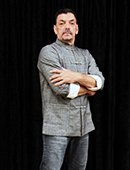
Among his accomplishments, he was a founder for the Unified Martial Arts Federation. He presented the sold out performance "Masters in Action" in 1992, which was one of the largest recognized Martial Arts Event of its time. It was during this event he was awarded the rank of Master Instructor by his Sifu. Additional, he was also one of the original co-publishers for Action Martial Arts Magazine.
Sifu Militano has also volunteered his time and expertise at the “Queens Lighthouse – Home for the Blind” teaching Wing Chun to the blind, hosted a number of Annual Open Martial Arts tournaments with the Boys Club of New York and trained the NYPD tactical unit. He’s been interviewed by Thrillist.com, FOX 5 News and Metro Sports NYC.
Sifu Michael Militano, a disciple & senior student of Grandmaster Jason Lau, began his Wing Chun training under him in Flatbush, Brooklyn in 1974.
In just three years, Grandmaster Lau had recognized that Sifu Militano had excelled in his training, his Wing Chun skills had quickly exceeded everyone else at the school. He was appointed instructor and began teaching his own class in the school on October 1, 1977.
In 1981, he achieved the level of Chief Instructor and was left in full charge of the school.